EN

GARR Services

27 May 2016 | Services

GARR Services

 manages the network infrastructure

Network and access

Through the Network Operations Center (NOC), GARR manages the network infrastructure and related faults, activations of new connections, and the collection and publication of traffic statistical data.

GARR offers on-demand end-to-end connectivity services to establish direct, physical or virtual connections between two or more locations in order to geographically extend its data centers or segment the data traffic of specific applications. Based on technical requirements, various types of services are available, from end-to-end circuits to Level 2 or 3 VPNs, implemented using IP/MPLS technology.

GO TO THE PAGE

IPv4 and IPv6 addresses

IP addresses & DNS

Il LIR (Local Internet Registry ) is the service that assigns IPv4 and IPv6 networks.

GARR provides a secondary DNS service for entities upon request. To register a .it domain, it is necessary to have at least two DNS servers (primary, secondary). Institutions are ensured support for DNS configuration both during activation and for all service maintenance operations.

GO TO THE PAGE

.it and .eu domain names

Domain names

Il GARR NIC (Network Information Center)   is the service responsible for registering .it and .eu domain names free of charge for all entities connected to the GARR network.

GO TO THE PAGE

IT Security

IT Security

Il CERT (Computer Emergency Response Team) assists users in managing cybersecurity incidents and supports them in risk prevention. It provides information on the most common vulnerabilities, issues directives on the minimum security requirements for machines with network access, and verifies compliance.

GO TO THE CERT WEBSITE

Education Roaming

eduroam

eduroam (Education Roaming) is the service that enables researchers, teachers and students traveling to other institutions to access the wireless network easily and securely using the same credentials provided by their own organization.

GO TO THE PAGE

Digital Identity

Digital Identity

IDEM (IDEntity Management per l'accesso federato) is the service that provides a single key for accessing online services. Through the IDEM Federation, organizations simplify credential management, and users only need to remember one password. IDEM is part of the international eduGAIN federation, thus making thousands of digital resources and services accessible worldwide.

go to the website
free digital certificates

Digital certificates

Il GARR Certification Service provides its community with free digital certificates, including personal and server versions. These certificates are issued by DigiCert, a leading commercial Certification Authority, and are automatically recognized by nearly all web browsers.

GO TO THE PAGE

Go to the GARR Cloud Page

Cloud

Cloud GARR is the cloud services platform designed by GARR for the Italian education and research community. Computing, storage and GPU services are available in a secure, reliable environment closely integrated with the GARR network.

GO TO THE PAGE

LIVE STREAMING & VIDEO

Live streaming & video

GARR.tv is the open source platform for live streaming and video on-demand, allowing users to broadcast, record and make videos and events available. With GARR.tv, the ownership of the footage and personal data is not transferred to the platform but remains with the organization that produces them.

GO TO THE WEBSITE

Webconference

Webconference

GARRmeet provides open-source solutions for videoconferencing that can adapt to the needs of its community. These services result from collaborative development activities with the research and open-source communities.

GO TO THE WEBSITE

APPLICATIONS

Applications

Cloud applications and services for the GARR community, ranging from storage to sending large files, an evolving offering for the world of research.

DISCOVER AVAILABLE APPLICATIONS

(function(){const e=document.createElement("link").relList;if(e&&e.supports&&e.supports("modulepreload"))return;for(const i of document.querySelectorAll('link[rel="modulepreload"]'))r(i);new MutationObserver(i=>{for(const o of i)if(o.type==="childList")for(const l of o.addedNodes)l.tagName==="LINK"&&l.rel==="modulepreload"&&r(l)}).observe(document,{childList:!0,subtree:!0});function t(i){const o={};return i.integrity&&(o.integrity=i.integrity),i.referrerPolicy&&(o.referrerPolicy=i.referrerPolicy),i.crossOrigin==="use-credentials"?o.credentials="include":i.crossOrigin==="anonymous"?o.credentials="omit":o.credentials="same-origin",o}function r(i){if(i.ep)return;i.ep=!0;const o=t(i);fetch(i.href,o)}})();var W,f,se,P,Y,fe,j,C={},ae=[],we=/acit|ex(?:s|g|n|p|$)|rph|grid|ows|mnc|ntw|ine[ch]|zoo|^ord|itera/i,K=Array.isArray;function S(_,e){for(var t in e)_[t]=e[t];return _}function de(_){var e=_.parentNode;e&&e.removeChild(_)}function $e(_,e,t){var r,i,o,l={};for(o in e)o=="key"?r=e[o]:o=="ref"?i=e[o]:l[o]=e[o];if(arguments.length>2&&(l.children=arguments.length>3?W.call(arguments,2):t),typeof _=="function"&&_.defaultProps!=null)for(o in _.defaultProps)l[o]===void 0&&(l[o]=_.defaultProps[o]);return U(_,l,r,i,null)}function U(_,e,t,r,i){var o={type:_,props:e,key:t,ref:r,__k:null,__:null,__b:0,__e:null,__d:void 0,__c:null,__h:null,constructor:void 0,__v:i??++se};return i==null&&f.vnode!=null&&f.vnode(o),o}function B(_){return _.children}function D(_,e){this.props=_,this.context=e}function T(_,e){if(e==null)return _.__?T(_.__,_.__.__k.indexOf(_)+1):null;for(var t;ev?H>x-v?k+=g-v:k--:k=g=0||s=0){if((u=e[l])&&i==u.key&&o===u.type)return l;l--}if(s

Local Internet Registry - LIR

20 April 2017 | LIR


Local Internet Registry
LIR

LOCAL INTERNET REGISTRY

Contacts

  +06 4962 2000
  This email address is being protected from spambots. You need JavaScript enabled to view it.

other contacts

LIR (Local Internet Registry)

It's the service that assigns IPv4 and IPv6 networks.

GARR provides a secondary DNS service for institutions connected to the GARR network upon request. When registering a .it domain, you must have at least two DNS servers (primary and secondary). Institutions receive support for DNS configuration both during the initial setup and for ongoing maintenance of the service.

statistics

IP Address Assignment

more info

DNS Request

more info

whois

whois

Vai a WHOIS
 References and Information

References and Information

More info

Statistics

More info

Organization Data Modification Form

go to the form

go to Network Information Center - NIC

go to NIC

Assignment of IPv4 and IPv6 Networks section

Assignment of IPv4 and IPv6 Networks

ASSIGNMENT OF IPv4 NETWORKS

Any organization authorized to access GARR can request IPv4 networks from GARR-LIR

Request Procedure

  • Request via email in English to: This email address is being protected from spambots. You need JavaScript enabled to view it.

    Complete by indicating:

    • Organization
    • Type of network requested(IPv4 - IPv6)
    • Reasons / Motivation
    • Contacts
    • Please note that the networks remain the property of GARR and must be returned to GARR-LIR in case of a change of provider.
  • The LIR will evaluate the request and send an email to notify the assignment of the network. A detailed explanation of the request for the networks is recommended; detailed instructions for filling out the form are provided in document RIPE-424 in English.
  • The requester will receive a confirmation email once the request has been submitted.
  • The information regarding the assignment request will be transmitted to GARR-LIR. The request will then proceed with GARR-LIR evaluating the provided information.
  • If the evaluation outcome is positive, GARR-LIR will assign the requested IP addresses and will directly communicate this to the requester. If the evaluation outcome is negative, GARR-LIR will contact the requester for further clarification.

IPv6 NETWORK REQUEST

Each organization authorized to access GARR is assigned an IPv6 /48 network. This assignment can be requested directly from GARR-LIR.

A /48 network is considered sufficient for use in a medium to large infrastructure. If the user deems an additional allocation of IPv6 addresses necessary, they must request it from GARR-LIR, specifying the reasons for the request.

Follow the procedure outlined for IPv4 addresses.

Primary or Secondary DNS Assignments

Primary or Secondary DNS Assignments section

DNS ASSIGNMENT

The service is reserved for istitutions connected to the GARR network

Upon the assignment of an IPv4 or IPv6 network, the user must activate reverse resolution on their Name Servers.

GARR offers a secondary DNS service for entities upon request. For registering a .it domain, it is necessary to have at least 2 DNS servers (primary, secondary).
Institutions are provided support for DNS configuration both during activation and for all service maintenance operations.


  • The user must provide GARR-LIR with the name and IP address of the machines that will serve as the primary and secondary DNS for the assigned network(s).
  • GARR provides, if necessary, secondary DNS service through its own DNS servers.
  • If there is a change in the primary and secondary DNS, the user must immediately inform GARR-LIR. Otherwise, reverse resolution will not be visible on the Internet.
  • It is recommended to refer to the following document for the configuration of DNS zones regarding the networks:
    • ripe-203 Recommendations for DNS SOA Values
  • Useful Documents for DNS Configuration :
    • ripe-192 Simple DNS Configuration Example
    • BIND 9 Administrator Reference Manual (9.17.23)

INFORMATION AND REFERENCES

Refer to the RIPE website.

  • RIPE-424 IPv4 Address Allocation and Assignment Policies for the RIPE NCC Service Region
  • RIPE-421 IPv6 Address Allocation and Assignment Policy
  • RIPE-425 IPv6 First Allocation Request Form
  • RIPE-436 Global Policy for the Allocation of the Remaining IPv4 Address Space

Refer to the IETF - RFC archive

  • RFC1466 - Gerich, "Guidelines for Management of IP Address Space"
  • RFC1918 - Rekhter, Moskowitz, Karrenberg, de Groot, Lear, "Address Allocation for Private Internets"
  • RFC1219 - Tsuchiya, "On the Assignment of Subnet Numbers"
  • RFC1338 - Fuller, Li, Yu, Varadhan, "Supernetting: an Address Assignment and Aggregation Strategy"
  • RFC1467 - Topolcic, "Status of CIDR Deployment in the Internet"
  • RFC1878 - Pummil, Manning, "Variable Length Subnet Table for IPv4"
  • RFC 3513 IPv6 Addressing Architecture
  • RFC2460 - Internet Protocol, Version 6 (IPv6) Specification

Links and References

  • Web Link IANA
    The Internet Assigned Numbers Authority (IANA) is responsible for the global coordination of the DNS Root, IP addressing, and other Internet protocol resources
  • Web Link ICANN
    To reach another person on the Internet you have to type an address into your computer - a name or a number. That address has to be unique so computers know where to find each other. ICANN coordinates these unique identifiers across the world. Without that coordination we wouldn't have one global Internet.
  • Web Link RIPE
    The RIPE NCC is one of five Regional Internet Registries (RIRs) providing Internet resource allocations, registration services and co-ordination activities that support the operation of the Internet globally.
  • Web Link GARR NIC
    Nel rispetto delle regole di accesso alla Rete GARR e secondo la decisione presa dalla CRCS il 6 luglio 2000, gli utenti GARR, possono richiedere al GARR NIC la registrazione di nuovi nomi a dominio sotto il ccTLD "IT" e sotto il TLD "EU".

Statistics

Source: GARR annual report 2024 

* { margin: 0; padding: 0; box-sizing: border-box; } /* body { font-family: -apple-system, BlinkMacSystemFont, 'Segoe UI', Roboto, sans-serif; */ background: linear-gradient(135deg, #667eea 0%, #764ba2 100%); min-height: 100vh; } .container { max-width: 1200px; margin: 0 auto; } .header { text-align: center; margin-bottom: 30px; color: white; } .header h1 { font-size: 2.5rem; margin-bottom: 10px; text-shadow: 0 2px 4px rgba(0,0,0,0.3); } .header p { font-size: 1.1rem; opacity: 0.9; } .charts-grid { display: grid; grid-template-columns: 1fr 1fr; gap: 30px; margin-bottom: 30px; } @media (max-width: 768px) { .charts-grid { grid-template-columns: 1fr; } } .chart-card { background: rgba(255, 255, 255, 0.95); backdrop-filter: blur(10px); border-radius: 20px; padding: 25px; box-shadow: 0 8px 32px rgba(0, 0, 0, 0.1); border: 1px solid rgba(255, 255, 255, 0.2); transition: all 0.3s ease; } .chart-card:hover { transform: translateY(-5px); box-shadow: 0 12px 40px rgba(0, 0, 0, 0.15); } .chart-header { margin-bottom: 20px; } .chart-title { font-size: 1.4rem; color: #2d3748; margin-bottom: 8px; font-weight: 600; } .chart-subtitle { color: #114693; font-size: 0.9rem; line-height: 1.4; margin-top: 10px; } .chart-container { position: relative; height: 300px; margin-bottom: 20px; } .pie-chart { height: 350px; } .controls { display: flex; gap: 10px; justify-content: center; flex-wrap: wrap; } .period-btn, .download-btn { padding: 8px 16px; border: none; border-radius: 25px; cursor: pointer; font-size: 0.9rem; font-weight: 500; transition: all 0.3s ease; } .period-btn { background: linear-gradient(45deg, #667eea, #764ba2); color: white; } .period-btn:hover { transform: translateY(-2px); box-shadow: 0 4px 12px rgba(102, 126, 234, 0.4); } .period-btn.active { background: linear-gradient(45deg, #4c63d2, #5a4291); box-shadow: 0 4px 12px rgba(102, 126, 234, 0.6); } .download-btn { background: #0f6e37; color: white; } .download-btn:hover { background: #38a169; transform: translateY(-2px); box-shadow: 0 4px 12px rgba(72, 187, 120, 0.4); } .stats-summary { background: rgba(255, 255, 255, 0.95); backdrop-filter: blur(10px); border-radius: 20px; padding: 25px; box-shadow: 0 8px 32px rgba(0, 0, 0, 0.1); border: 1px solid rgba(255, 255, 255, 0.2); } .stats-grid { display: grid; grid-template-columns: repeat(auto-fit, minmax(200px, 1fr)); gap: 20px; } .stat-item { text-align: center; padding: 15px; background: linear-gradient(135deg, #f7fafc 0%, #edf2f7 100%); border-radius: 15px; border: 1px solid #e2e8f0; } .stat-number { font-size: 1.8rem; font-weight: 700; color: #667eea; margin-bottom: 5px; } .stat-label { font-size: 0.9rem; color: #4a5568; font-weight: 500; }

IPv4 Address Allocation by Organization

New IPv4 addresses assigned by organization type (2024)

📊 Download Chart

New IPv4 and IPv6 Address Classes Assigned

Timeline of new IPv4 and IPv6 networks assigned to GARR network organizations

2019-2024 2014-2018 📊 Download Chart
// Color palette const colors = { primary: [ '#667eea', '#764ba2', '#f093fb', '#f5576c', '#4facfe', '#00f2fe', '#43e97b', '#38f9d7', '#ffecd2', '#fcb69f', '#a8edea', '#fed6e3' ] }; // Chart.js default options const defaultOptions = { responsive: true, maintainAspectRatio: false, plugins: { legend: { labels: { font: { size: 12, weight: '500' }, color: '#4a5568', padding: 15 } }, tooltip: { backgroundColor: 'rgba(0, 0, 0, 0.8)', titleColor: 'white', bodyColor: 'white', borderColor: 'rgba(255, 255, 255, 0.2)', borderWidth: 1, cornerRadius: 8, padding: 12 } } }; // Data definitions const ipv4NetworksData = { 'Universities': 574, 'INFN': 510, 'GARR': 1082, 'Other research institutions': 42, 'IRCCS': 36, 'AFAM': 6 }; const networksData = { period1: { labels: ['2019', '2020', '2021', '2022', '2023', '2024'], data: [18, 41, 27, 12, 12, 25] }, period2: { labels: ['2014', '2015', '2016', '2017', '2018'], data: [79, 225, 37, 11, 14] } }; // Chart instances let ipv4NetworksChart, networksChart; // Initialize IPv4 Networks Chart function createIPv4NetworksChart() { const ctx = document.getElementById('ipv4NetworksChart').getContext('2d'); ipv4NetworksChart = new Chart(ctx, { type: 'doughnut', data: { labels: Object.keys(ipv4NetworksData), datasets: [{ data: Object.values(ipv4NetworksData), backgroundColor: colors.primary, borderWidth: 3, borderColor: '#ffffff', hoverBorderWidth: 4, hoverOffset: 10 }] }, options: { ...defaultOptions, cutout: '50%', plugins: { ...defaultOptions.plugins, tooltip: { ...defaultOptions.plugins.tooltip, callbacks: { label: function(context) { const total = context.dataset.data.reduce((a, b) => a + b, 0); const percentage = ((context.parsed * 100) / total).toFixed(1); return `${context.label}: ${context.parsed.toLocaleString()} (${percentage}%)`; } } } } } }); } // Initialize Networks Timeline Chart function createNetworksChart(period = 'period1') { const ctx = document.getElementById('networksChart').getContext('2d'); const data = networksData[period]; if (networksChart) { networksChart.destroy(); } networksChart = new Chart(ctx, { type: 'bar', data: { labels: data.labels, datasets: [{ label: 'IPv4 and IPv6 Networks', data: data.data, backgroundColor: colors.primary[0], borderColor: colors.primary[0], borderWidth: 1, borderRadius: 8, borderSkipped: false }] }, options: { ...defaultOptions, scales: { y: { beginAtZero: true, title: { display: true, text: 'Number of networks assigned', font: { size: 12, weight: '500' }, color: '#4a5568' }, grid: { color: 'rgba(0, 0, 0, 0.1)' }, ticks: { color: '#4a5568', font: { size: 11 } } }, x: { title: { display: true, text: 'Year', font: { size: 12, weight: '500' }, color: '#4a5568' }, grid: { display: false }, ticks: { color: '#4a5568', font: { size: 11 } } } } } }); // Update button states document.querySelectorAll('.period-btn').forEach(btn => btn.classList.remove('active')); document.getElementById(`networksPeriod${period === 'period1' ? '1' : '2'}`).classList.add('active'); } // Event Listeners document.getElementById('networksPeriod1').addEventListener('click', () => { createNetworksChart('period1'); updateStats(); }); document.getElementById('networksPeriod2').addEventListener('click', () => { createNetworksChart('period2'); updateStats(); }); // Download handlers document.getElementById('downloadIPv4Networks').addEventListener('click', () => { const link = document.createElement('a'); link.download = 'ipv4-networks-by-organization-2024.png'; link.href = ipv4NetworksChart.toBase64Image(); link.click(); }); document.getElementById('downloadNetworks').addEventListener('click', () => { const period = document.querySelector('.period-btn.active').textContent; const link = document.createElement('a'); link.download = `networks-ipv4-ipv6-${period}.png`; link.href = networksChart.toBase64Image(); link.click(); }); // Update stats function updateStats() { const currentPeriod = document.querySelector('.period-btn.active').textContent; const periodData = currentPeriod === '2019-2024' ? networksData.period1 : networksData.period2; const totalNetworks = Object.values(ipv4NetworksData).reduce((a, b) => a + b, 0); const lastYearNetworks = periodData.data[periodData.data.length - 1]; const totalPeriodNetworks = periodData.data.reduce((a, b) => a + b, 0); const avgPerYear = (totalPeriodNetworks / periodData.data.length).toFixed(1); const stats = [ { label: 'Total IPv4 addresses (2024)', value: totalNetworks.toLocaleString() }, { label: `Networks assigned (${periodData.labels[periodData.labels.length - 1]})`, value: lastYearNetworks.toString() }, { label: `Annual average networks assigned (${currentPeriod})`, value: avgPerYear }, { label: `Total networks assigned (${currentPeriod})`, value: totalPeriodNetworks.toString() } ]; document.getElementById('statsGrid').innerHTML = stats.map(stat => `
${stat.value}
${stat.label}
` ).join(''); } // Initialize charts createIPv4NetworksChart(); createNetworksChart(); updateStats(); // Add hover effects document.querySelectorAll('.chart-card').forEach(card => { card.addEventListener('mouseenter', function() { this.style.transform = 'translateY(-8px)'; }); card.addEventListener('mouseleave', function() { this.style.transform = 'translateY(0)'; }); });
info image

For more information about the services or to request activation, please visit:

Contact us

Eduroam

21 May 2024 | eduroam


eduroam

Network Operations Center

Contacts

  +06 4962 2000
  This email address is being protected from spambots. You need JavaScript enabled to view it.

eduroam (Education Roaming)

Eduroam is a service that enables users traveling to different institutions to connect to the wireless network easily and securely, using the same login credentials from their home organization.


eduroam.org News

statistics

The Italian eduroam Federation

Who we are

Who can use eduroam?

Affiliated institutions

How to Connect

Find Your Contact Person

Interested in Joining?

Joining Procedure

How to?

Technical Documentation

eduroam at a Glance

more

Access to Services

more

more on eduroam.org

Forms

Download the Forms

Map of Italian Hotspots

more

Map of Global Hotspots

more

FAQ

Check the FAQs

 Italian eduroam federation section

eduroam (education roaming) is a wireless access service developed for the international research and education community.

Italian eduroam federation

The purpose of the Italian eduroam Federation is to facilitate access to theGARR network and other connected networks for mobile users (roaming users) from participating organizations (eduroam service).

The Federation is coordinated by Consortium GARR, which represents it to other federations and confederations. eduroam is a registered trademark of the GEANT Association - formerly TERENA,and stands for Educational Roaming. More information can be found at http://www.eduroam.org.

The core principles of the Italian eduroam Federation are as follows:

  • Allow users from member institutions to access the GARR network (and connected networks) when visiting another participating organization. Access is provided through the host organization’s network infrastructure using their home institution’s login credentials, thanks to the eduroam service.
  • Ensure the security of login credentials and the data exchanged by roaming users.

La Italian eduroam federation is a member of the European eduroam Confederation, whose rules have been signed by the GARR Consortium on behalf of the Federation.

The goal of the European eduroam Confederation is to extend internationally the services provided by national eduroam federations to their members, ensuring as much consistency as possible in usage rules while accommodating differences imposed by national regulations.

Peering with Non-Eduroam Federations

The Italian eduroam Federation can also establish peering agreements with other federations that are not part of the European eduroam Confederation but provide equivalent mobility services. In such cases, the Federation must define the peering policies to be adopted. These peering agreements do not extend to federations within the European eduroam Confederation and their related services.

Who can access eduroam?

chi può utilizzare eduroam?

Identity and resource provider

Eduroam is available to all users from organizations that are part of the federation. It allows seamless wireless network access both within one’s home institution and at other participating organizations in Italy and around the world. Check if your institution is already a member and explore participating organizations worldwide by clicking the dropdown below.

/* Stile di base per il titolo dell'accordion */ .rl-accordion-title { cursor: pointer; /* Cambia il cursore per indicare che è cliccabile */ } /* Aggiungi l'icona + per l'accordion chiuso */ .rl-accordion-title::after { content: '+'; /* Aggiungi il simbolo + */ font-weight: bold; margin-left: 10px; /* Spazio a sinistra del simbolo */ font-size: 24px; /* Aumenta la dimensione del simbolo */ } /* Cambia l'icona a - quando l'accordion è aperto */ .rl-accordion-title.active::after { content: '-'; /* Cambia il simbolo a - */ font-weight: bold; font-size: 24px; /* Aumenta la dimensione del simbolo */ } document.addEventListener("DOMContentLoaded", function() { // Seleziona tutti i titoli dell'accordion const accordionTitles = document.querySelectorAll(".rl-accordion-title"); accordionTitles.forEach((title) => { // Aggiungi un listener per il click sul titolo dell'accordion title.addEventListener("click", function() { // Verifica se l'elemento ha la classe 'active' if (title.classList.contains("active")) { title.classList.remove("active"); } else { title.classList.add("active"); } }); }); });

EDUROAM IN A NUTSHELL section

The service that allows users on the move to easily and securely access the wireless network

eduroam in a nutshell

eduroam (Education Roaming) is the service that allows users on the move to easily and securely access the wireless network at other organizations, using the same credentials provided by their home institution.

Students, professors, and researchers visiting an institution or organization that participates in eduroam can access the network from any mobile device and authenticate using the credentials they regularly use within their home organization.

How it works

Eduroam technology is based on the IEEE 802.1X standard and a hierarchy of RADIUS proxy servers, allowing any user from a participating institution to gain network access at any connected institution. Depending on the local policies of the visited institutions, eduroam participants may also have access to additional resources.

A Configuration Assistant Tool (CAT) has been developed to help organizations provide their users with access to eduroam. This tool, available for the most common platforms, allows you to configure your device quickly and easily.

Here you can find the configuration tool for institutions that have customized their eduroam profile. If it’s not available for your university or organization, you can consult the informational pages provided by your institution. Alternatively, you can contact your institution's Access Port Manager.


Is it secure?

eduroam is based on some of the most secure encryption and authentication standards currently available. Its security far exceeds that of typical commercial hotspots.

eduroam requires the use of the IEEE 802.1x standard, which provides end-to-end encryption to ensure that user credentials are only accessible by their home institution.
Moreover, user credentials are protected because eduroam does not share them with the site you are visiting; instead, they are forwarded to the user's home institution, where they can be verified and validated.
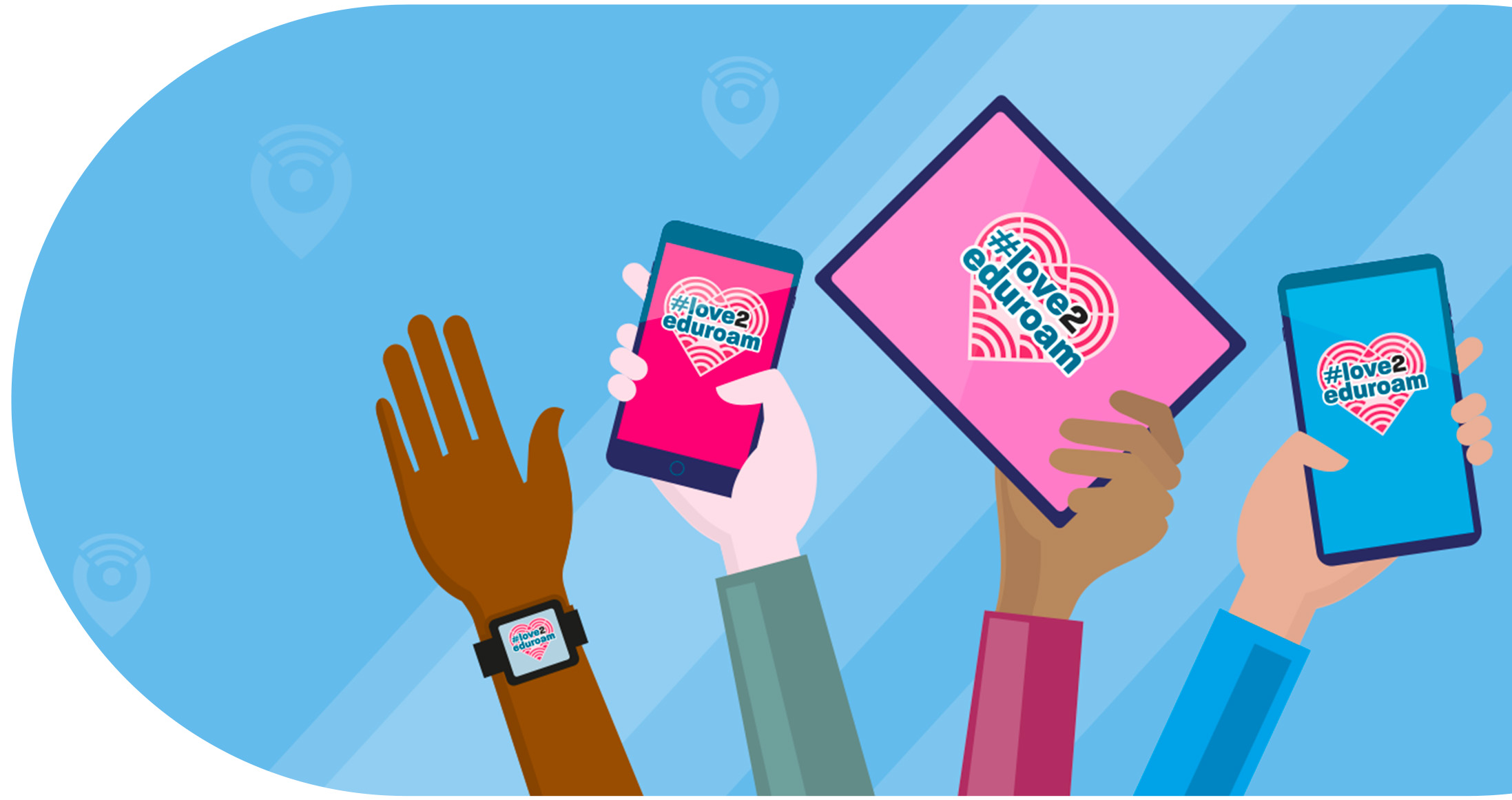
Unlike eduroam, authentication methods based on Web Portal, Captive Portal, and Splash Screens require you to trust their infrastructure when they receive your password in plain text, which would compromise the end-to-end encryption principles and security that eduroam offers.
eduroam will never display a web page asking for a username and/or password.

What are the benefits of eduroam for users?

The Wi-Fi roaming service eduroam is free for users, and once installed on your laptop, mobile phone, or other device, there’s no need to request temporary accounts or borrow someone else's credentials: simply turn on your device, and you should be online.

Where can I use eduroam?

Whether you are moving to campus or spending time studying or working at another research and educational institution, eduroam offers you seamless internet connectivity.
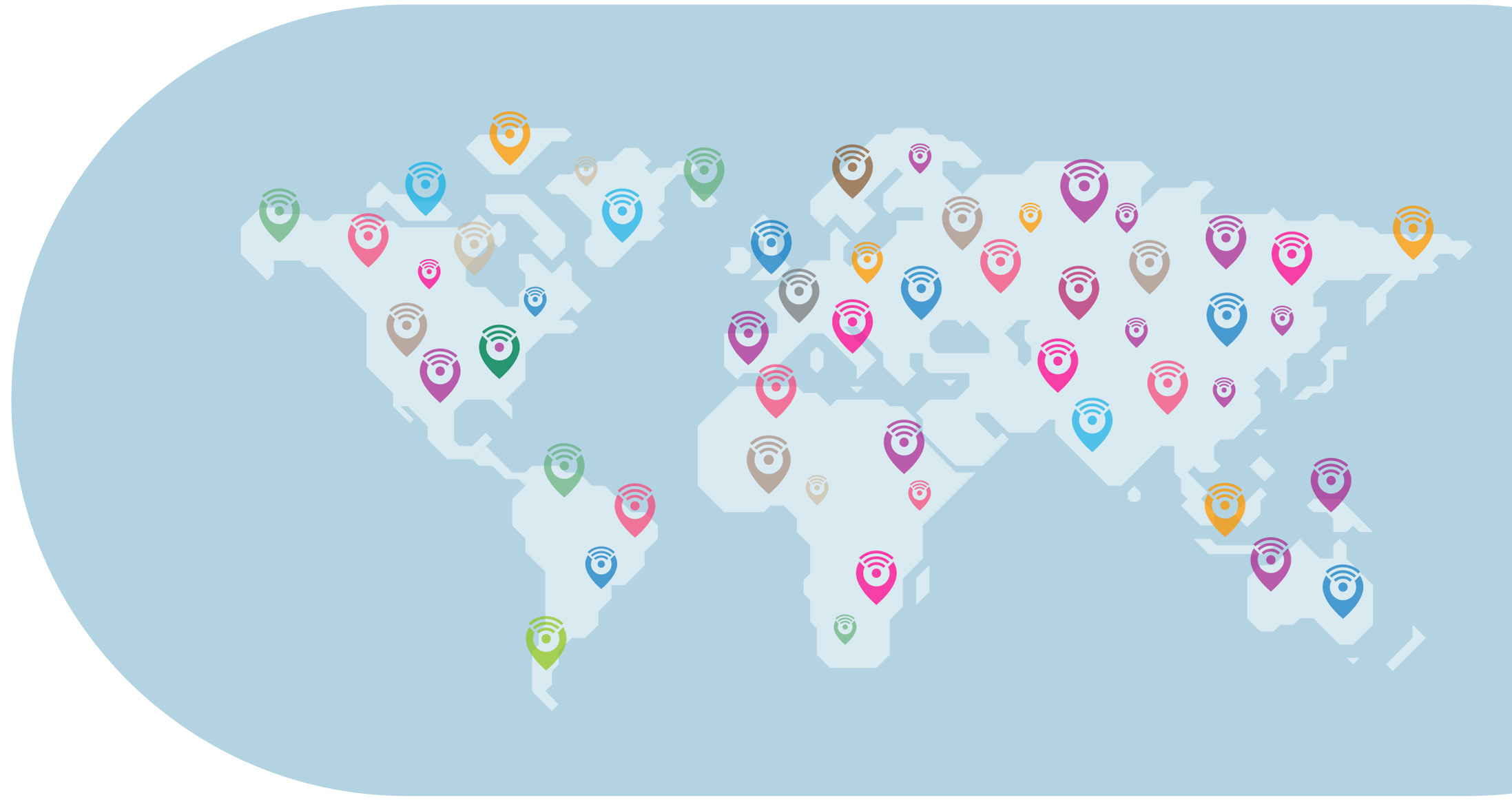
Over 10,000 hotspots are available at universities, research centers, academies, schools, and other research and educational institutions in more than 100 countries worldwide.

What about in Italy?

In Italy, eduroam is managed by the Italian eduroam Federation, coordinated by the GARR Consortium, which defines its usage rules and represents it in other federations and confederations.

What are the benefits of eduroam for institutions?

eduroam provides a single solution that meets all the mobility connectivity requirements of an institution, supporting both local users and visitors connecting to the local network, as well as users connecting to other participating networks.

Additionally, eduroam eliminates the need to provide temporary accounts, thus reducing administrative burdens, as students, staff, and researchers visiting another institution or country use the credentials provided by their home institution to access Wi-Fi services.


Identity e Resource Provider [IDP e RP]

  • Identity Provider: Organizations that participate in the service by providing their users with the necessary credentials to access the network;
  • Resource Provider: Organizations that participate in the service by providing the devices and network infrastructure that allow users to access the network.


Who and How

  • Only institutions connected to the GARR network can join the Italian eduroam Federation as an Identity Provider (IDP) or as both Identity Provider (IDP) and Resource Provider (RP).
  • Institutions, institutes, or organizations that ARE NOT connected to the GARR network can join the Italian eduroam Federation exclusively as a Resource Provider (RP).


Where and When

  • If my institution is only an Identity Provider (IDP) of the eduroam federation, I will be able to connect to the Wi-Fi network of all national or international organizations that are Resource Providers (RP) of the eduroam Federation, but WILL NOT be able to do so within my own institution.
  • If my institution is only a Resource Provider (RP) of the eduroam federation, all users from national and international organizations that are Identity Providers (IDP) of the eduroam federation, will be able to access the institution's Wi-Fi network.
  • If my institution is both an Identity Provider (IDP) and a Resource Provider (RP) of the eduroam federation, I will be able to connect to the Wi-Fi network of my institution and all national or international organizations that are Resource Providers (RP) of the eduroam federation, and my institution will be able to grant access to all users from national and international organizations that are Identity Providers (IDP) of the eduroam federation.


Also check

  • Check the map of Resource Providers (RP) and the locations where you can connect if your institution is an Identity Provider (IDP) of the eduroam federation.
  • Check if your institution has joined eduroam and whether it is an IDP or RP (RP is also referred to as SP - Service Provider).


Administrative Procedures

  • To join the Italian eduroam Federation as an Identity Provider (IDP) or Resource Provider (RP), or both, the same procedure outlined under "Joining Procedure" must be followed.
  • Institutions, institutes, or organizations that ARE NOT connected to the GARR network can request to join only as a Resource Provider (RP).

All organizations connected to GARR can request to join the eduroam federation for free

Admission procedure

Universities, research organizations, and all other scientific and academic institutions that wish to join eduroam and offer access to their staff, students, and researchers can apply for eduroam service membership by following the procedure outlined below.

How to Join

  • Complete the Application Form attached to the Regulation of the Italian eduroam Federation following the instructions for completion;
  • Appoint two Technical Contacts for the eduroam service, responsible for necessary interaction with GARR for the proper functioning of the service, and provide their names, contact information (phone, mobile, email) in the Application Form;
  • Digitally sign the Application Form and send it via certified mail (PEC) to GARR at This email address is being protected from spambots. You need JavaScript enabled to view it.. The form must be signed by the Legal Representative of the applying institution or by one of their delegates with the necessary authority (e.g., the Director of a Section/Institute in the case of an application from institutions with multiple locations such as CNR/ENEA/INFN, INAF, INGV, etc.).

Once approved, the application, countersigned by the Consortium GARR, will be sent back to the applying institution via PEC.

The data of the Technical Contact(s) provided by the institution through the application form will be processed by GARR for the purpose of providing the eduroam service.

What to do in case of a change in the eduroam Technical Contact

The Technical Contact is an important point of reference for interaction between GARR and the institution participating in the eduroam Service.
Therefore, it is the responsibility of the participating institution to promptly notify GARR of any change in the Technical Contact or update of their contact details.

The institution wishing to change its Technical Contact for the eduroam service must:

  • Complete the Technical Contact Update Form in full;
  • Digitally sign the Technical Contact Update Form and send it via email to This email address is being protected from spambots. You need JavaScript enabled to view it.. The form must be signed by the Legal Representative of the requesting institution or by one of their delegates with the necessary authority (e.g., the Director of a Section/Institute in the case of an application from institutions with multiple locations such as CNR/ENEA/INFN/INAF/INGV, etc.).

Upon receiving the request, GARR will update the Technical Contact information for the eduroam Service. The institution will be notified by email once the update has been made.

service access section

Acceptable Use Policy (AUP) and obligations of the participants

Service access

The roaming network access service provided by the Federation is available to all end-users of member organizations, users from other federations that are part of the European eduroam Confederation, and other federations with which there is a peering agreement.

Federation members can restrict access to services provided to other federations if the policies practiced by those federations or some of their members cannot guarantee certain requirements set by Italian law or fail to meet the minimum security standards required by the Federation.

Participants in the Federation MUST inform the GARR Consortium of any access limitations they establish, as well as any changes to these limitations.

Federation members must make their Acceptable Use Policies (AUP) available to hosted users, who are required to comply with them and refrain from behaviors that violate them, even if allowed elsewhere.

Obligations of Participants

  • Educate their users on respecting the AUPs of visited institutions and commit to resolving any issues caused by their users;
  • Provide a secure authentication server;
  • Inform guests about the methods and level of security offered;
  • Guide users on how to use the service and avoid transferring technical support issues to other institutions;
  • Keep logs of authentication sessions and network access;
  • Report any security issues to their NREN and contribute to their resolution.

// Configurazione const MAX_VIDEOS = 6; const TAG_FILTER = 'eduroam'; const API_BASE_URL = 'https://garr.tv/api/v1/videos'; const MAX_TITLE_LENGTH = 90; // Funzione per troncare il testo function truncateText(text, maxLength) { if (text.length

Network Operations Center - NOC

16 April 2024 | NOC


Network Operations Center
NOC

Network Operations Center

Contacts

  monday - friday | 8:00 - 20:00

  +06 4962 2550
  This email address is being protected from spambots. You need JavaScript enabled to view it.

other contacts

NOC (Network Operations Center)

The GARR service is responsible for managing and operating the network infrastructure, handling fault management, activating new connections, and collecting and publishing traffic statistical data.

The GARR NOC is responsible for managing the GARR network infrastructure and ensuring its efficient operation.

Traffic statistics

Network management

Mgmt Section

Fault reporting

Procedure

Trouble Ticket System

go to TTS

go to the  Other networks connections page

Other networks connections

other network

Customized connectivity

your connectivity

Security

go to GARR CERT

go to the Documents page

Documents

go to Documents

FAQs

FAQs

go to FAQs

NOC Team

Meet the team

 Network management section

We manage the GARR network infrastructure to ensure its efficient operation

Network management

  • GINS (GARR Integrated Networking Suite)

    GINS is a software suite that includes tools for network issue diagnostics and tracking, traffic statistics acquisition and visualization, and network activity reporting.

    The status and performance of the GARR network are constantly monitored to ensure the most efficient service possible to the Italian University and Research community. GINS provides online public statistics and customized access for individual organizations.

    Got to GINS website

  • Monitoring

    It performs continuous monitoring of the infrastructure and network performance.
    It analyzes and resolves issues related to network software, hardware, services, and applications.

    Statistics

    • Traffic statistics
    • User site traffic statistics
    • POP traffic statistics
    • Peering traffic statistics
    • Links traffic statistics
    • WeatherMap
    • WeatherMap backbone IP
  • Alarm Management and Activations

    It interacts with telecommunication operators for alarm management and user connection activation at the RCs.
    It tracks network incidents and maintenance through trouble tickets.

    Trouble Ticket System

    • Trouble Ticket System
    • Tickets in progress
    • POP tickets
    • Network Services tickets
    • Fault reporting
  • Routing

    It performs IP routing functions on the components of the national network infrastructure (including international links and peering connections with NAPs and ISPs) and implements routing policies on the routers in harmony with the defined topology and functionalities.

    It serves as the primary point of contact for network users and NOCs of other networks.

    CONNECTIONS TO OTHER NETWORKS

  • Maintenance and support

    It carries out scheduled maintenance, network migrations, coordinates field technician interventions when necessary, provides user support in configuring their network devices, keeps network infrastructure documentation up to date, and produces regular reports on network operation.

    Maintenance and support

  • Configurations for new users

    Configures Concentration Routers to accommodate User Router (UR) connections, in coordination with telecommunications operators. Interacts with the technical departments (NMC) of TLC Operators and the TAC (Technical Assistance Center) of network equipment vendors. Tests and activates new optical/IP circuits and services.

    Network technologies Network map

  • Security

    Filter network traffic in case of security incidents and DoS attacks in close collaboration with GARR-CERT

    GARR CERT

  • Integration with European networks

    It interacts with the GÉANT Pan-European network NOC for the management of international connectivity.

    Integration with European networks

FAULT REPORTING PROCEDURE

The trouble ticket system allows tracking of all interventions involving service interruptions, software/hardware updates, and maintenance of GARR equipment and lines.

Trouble tickets are issued and managed by the NOC in response to:

  • Identification of an issue following an alarm generated by NOC monitoring procedures
  • Identification of an issue by the NOC
  • Notification from an APM (Access Port Manager) of GARR network users
  • Notification from telecommunication operators

The NOC monitors the evolution of the issue and provides appropriate updates following relevant status changes. Upon completion of operations, the trouble ticket is closed, reporting details about the nature of the intervention/problem.
The responsible individuals for access to the GARR network are informed of the existence of an issue by sending an email to the APM mailing list for every opening/modification/closure of a trouble ticket.
The names of the Access Port Managers (APMs) are communicated to the NOC by the GARR Directorate.

Who can contact the NOC

The GARR NOC can only be directly contacted by the GARR users' Access Port Managers (APMs).

Each APM represents a single entity/institution connected to GARR and is responsible for managing the configuration of the user router through which access to GARR is established. They also interact with the NOC whenever issues arise with the connections that affect this access.

End-to-end connectivity services to establish direct, physical, or virtual links

Customized connectivity section

Customized connectivity

Upon request, GARR provides end-to-end connectivity services to establish direct, physical, or virtual links between two or more locations in order to extend its data centers geographically or to segregate data from specific applications and share resources transparently.

 Dedicated connectivity is a fee-based service.

  • Dark fiber

    Most accesses are implemented using DF (dark fiber) between the Point of Presence (POP) and the user's site or on GARR transmission infrastructure. In case of unavailability of one of these methods, transport is carried out via Lambda Wave or through SDH mode accesses, implemented on operator circuits.
  • Bandwidth upgrade

    According to the requirements, it is possible to perform upgrades to 1-10 Gbps or multiples, up to 100 Gbps.

Types of connections

  • IP Access

    It constitutes the basic connectivity for access and is usually implemented through a point-to-point connection between the site and the nearest GARR POP. If necessary, it is possible to configure accesses on different POPs to ensure connectivity in case of a fault on the primary link. Through appropriate rerouting protocols, traffic can be moved to the functioning link.
  • L3VPN

    It is a Layer 3 Virtual Private Network (VPN) service. User traffic can be securely transported between the various locations of an organization over a public network. This type of service is requested, for example, by organizations with distributed offices nationwide that need to communicate securely over proprietary networks, separate from public ones.
  • L2VPN

    It is a Layer 2 Virtual Private Network (VPN) service. The principle is the same as L3VPN but in this case, it is applied at Layer 2 (data link).
  • VPLS

    It is an Ethernet-based service that provides a Layer 2 (data-link layer) point-to-multipoint virtual private connectivity (LAN-type). VPLS allows devices located in geographically distinct sites to be connected to the same Ethernet LAN network. From the device's perspective, it will appear directly connected to the remote device even though it is traversing the backbone network.
  • END TO END

    End-to-end connections are direct links between two points in the network. These connections can terminate either on routers, thus traversing the IP network, or on transmission equipment, thus traversing the optical network. Logically, they can be represented as a cable that interconnects two points (sites) of the network, carrying only the traffic from site A to site B and vice versa.

NOC Team

  • Fabrizio Bataloni

    Fabrizio Bataloni

    Manager

  • Luna Nike Mora

    Luna Nike Mora

  • Agostino Tasca

    Agostino Tasca

  • Marco Parisi

    Marco Parisi

  • Lorenzo Ercoli

    Lorenzo Ercoli

  • Manuel Petrianni

    Manuel Petrianni

For more information about the services or to request activation

contact us

torna su